
Aktuelles ·
CHRONIC FATIGUE SYNDROME (ME/CFS) Is Not in Your Head!
ME/CFS (Myalgic Encephalomyelitis/Chronic Fatigue Syndrome) is a serious illness with growing scientific evidence confirming its link to COVID-19. Yet it frequently remains unrecognized and misdiagnosed – to the great distress of patients.
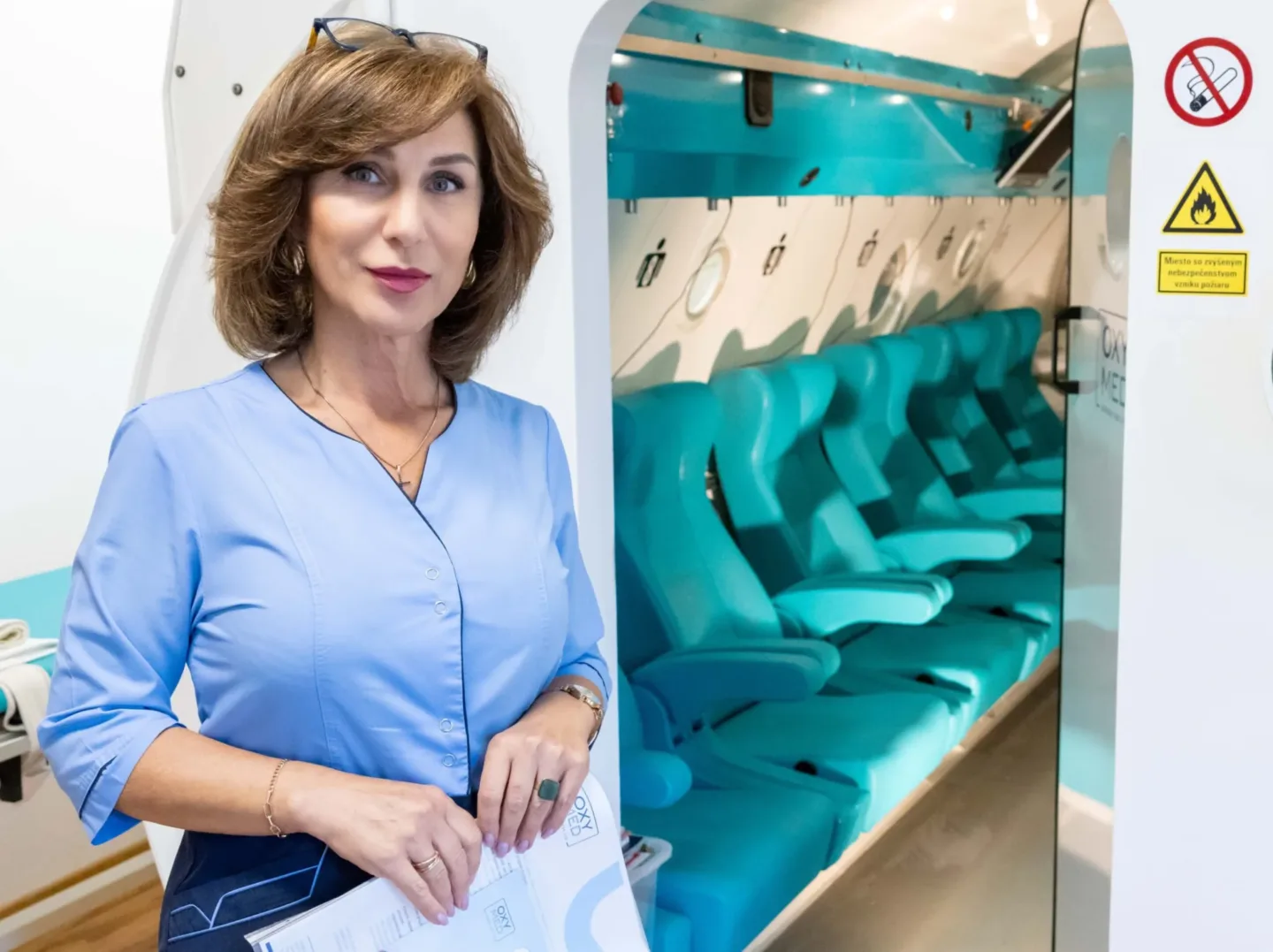
The Hyperbaric Oxygen Therapy Department at ADELI Medical Center and Dr. Inna Durda have dedicated years to this condition and gained valuable experience treating it in the hyperbaric chamber. Even so, practical experience often shows that ME/CFS is rarely diagnosed correctly or that its connection to COVID-19 is met with deep skepticism. Patients do not feel taken seriously and suffer as a result. Entirely unnecessarily—because hyperbaric oxygen therapy has helped so many. The evidence that COVID-19 can trigger chronic fatigue syndrome is becoming increasingly concrete and extensive.
"Our findings demonstrate that the rate and risk of developing ME/CFS following a SARS-CoV-2 infection are significantly increased," write the authors of a new study (from January 2025) led by ME/CFS researcher Dr. Suzanne Vernon from the Bateman Horne Center in the United States.
Six months or longer after a SARS-CoV-2 infection, participants were 7.5 times more likely to meet the diagnostic criteria for ME/CFS than individuals who had not been infected.
The researchers point to further Scientific work indicating that various infectious agents (e.g., the Epstein-Barr virus or Ross River virus) as well as non-viral illnesses (such as Q fever or giardiasis) are linked to the onset of ME/CFS.
Although the exact cause of ME/CFS remains unknown, it is widely suspected that viral infections can act as a trigger.
📌 Estimates suggest that between 13% and 58% of Long COVID patients meet the diagnostic criteria for ME/CFS.
📌 Prior to the 2020 pandemic, the disease burden of ME/CFS in the US was estimated to be double that of HIV/AIDS.
📌 More than 18 million adults are already affected by Long COVID. Researchers therefore anticipate that the number of ME/CFS cases could double in the near future.
📌 The recent study was funded by the US National Institutes of Health (NIH) and included 11,785 participants who had contracted COVID-19 at least six months previously, as well as 1,439 uninfected individuals.
📌 None of the participants had a prior diagnosis of ME/CFS, and most were vaccinated against COVID-19.
📌 4.5% of participants who previously had COVID-19 met the criteria for ME/CFS, with the diagnosis typically requiring persistent fatigue lasting at least six months, accompanied by post-exertional malaise, cognitive difficulties, unrefreshing sleep, or orthostatic intolerance.
📌 89% of these patients concurrently met the criteria for Long COVID.
📌 The study's authors propose that ME/CFS following a COVID-19 infection represents a particularly severe subgroup of Long COVID patients.
📌 To better differentiate between these two diagnoses, further research is needed—especially as both conditions manifest differently from person to person.
🔎 Key Terms Explained:
🟢 Post-Exertional Malaise (PEM)
A state in which even minimal physical or mental exertion leads to a disproportionate and prolonged worsening of symptoms.
Patients with ME/CFS or Long COVID frequently experience PEM—following activity, they may feel completely exhausted, accompanied by pain, brain fog, and other symptoms that can persist for days or weeks.
PEM is one of the core diagnostic criteria for ME/CFS and sets it apart from ordinary fatigue.
🟢 Cognitive Difficulties
Impairments in thinking, information processing, and memory, including:
✔ Difficulty concentrating – challenges in maintaining focus
✔ Brain fog – a feeling of mental confusion or slowed thinking
✔ Short-term memory issues – forgetfulness or trouble recalling information
✔ Language and communication difficulties – struggling to find the right words
✔ Slowed information processing – slower thinking and delayed responses
These symptoms are common in ME/CFS, Long COVID, neurological disorders, as well as states of severe exhaustion and stress.
🟢 Orthostatic Intolerance (OI)
A disorder in which the body cannot properly regulate blood pressure and blood flow when transitioning from sitting or lying down to standing upright.
Symptoms include:
✔ Dizziness or lightheadedness upon standing
✔ Nausea or weakness
✔ Rapid or irregular heartbeat (tachycardia)
✔ Excessive sweating or fatigue
✔ Brain fog and concentration difficulties
✔ In severe cases, fainting (syncope)
Orthostatic intolerance frequently occurs in ME/CFS, Long COVID, POTS (postural orthostatic tachycardia syndrome), and other disorders of the autonomic nervous system.