
Aktuelles ·
Supporting Healthy Development: ADELI Baby Zone Raises Awareness
Learn how the ADELI Baby Zone raises awareness and helps identify and address early childhood developmental delays through the "Key to a Healthier Future" project.
A Look Back at 2023: ADELI BABY ZONE Educates the Public
A healthy, developing child naturally displays curiosity about the world, a desire to discover what is yet unfamiliar, and an eager drive to learn what they cannot yet do. However, not every child learns "naturally," and professional guidance is often required along the way. All too often, adults surrounding a child only notice developmental delays once they have become significant.
Professionals frequently refer to coordination disorders in children as "dyspraxia" or "developmental dyspraxia." The term "dyspraxia" comes from Greek, where "dys" means difficulty and "praxis" refers to movement or action. Dyspraxia presents as an impaired ability to plan and carry out movements accurately and in the proper sequence. In the context of coordination disorders in children, the term "Developmental Coordination Disorder" (DCD) is also used, highlighting the developmental nature of the condition. DCD can affect various areas of motor function, including gross and fine motor skills, and is frequently diagnosed in children with genetic syndromes. Doctors also commonly identify a "central coordination disorder," which points to an underlying neurological issue such as a brain injury or cerebral palsy. In all of these cases, there is an underlying dysfunction of the central nervous system. A key manifestation of nervous system impairment or immaturity is also a noticeably altered muscle tone—hypertonia or hypotonia. These conditions require immediate therapeutic intervention!
Unfortunately, knowledge regarding disorders, immaturities, and delays resulting from central nervous system dysfunction is not common knowledge among the public or new parents. While their prevalence in the population increases significantly each year, the availability of specialists experienced in these conditions is declining. In our practice, we often witness developmental delays that could have been anticipated but were not identified in time (particularly in premature babies or children from high-risk pregnancies). It is the mission of ADELI Medical Center to educate the public about developmental risks in infants and to provide early intervention support as promptly as possible. The project developed together with the ADELI Foundation has established itself under the name "Key to a Healthier Future." For three years now, it has helped educate the public on the warning signs of developmental delay and has recommended therapeutic steps that foster and accelerate development in babies and toddlers.
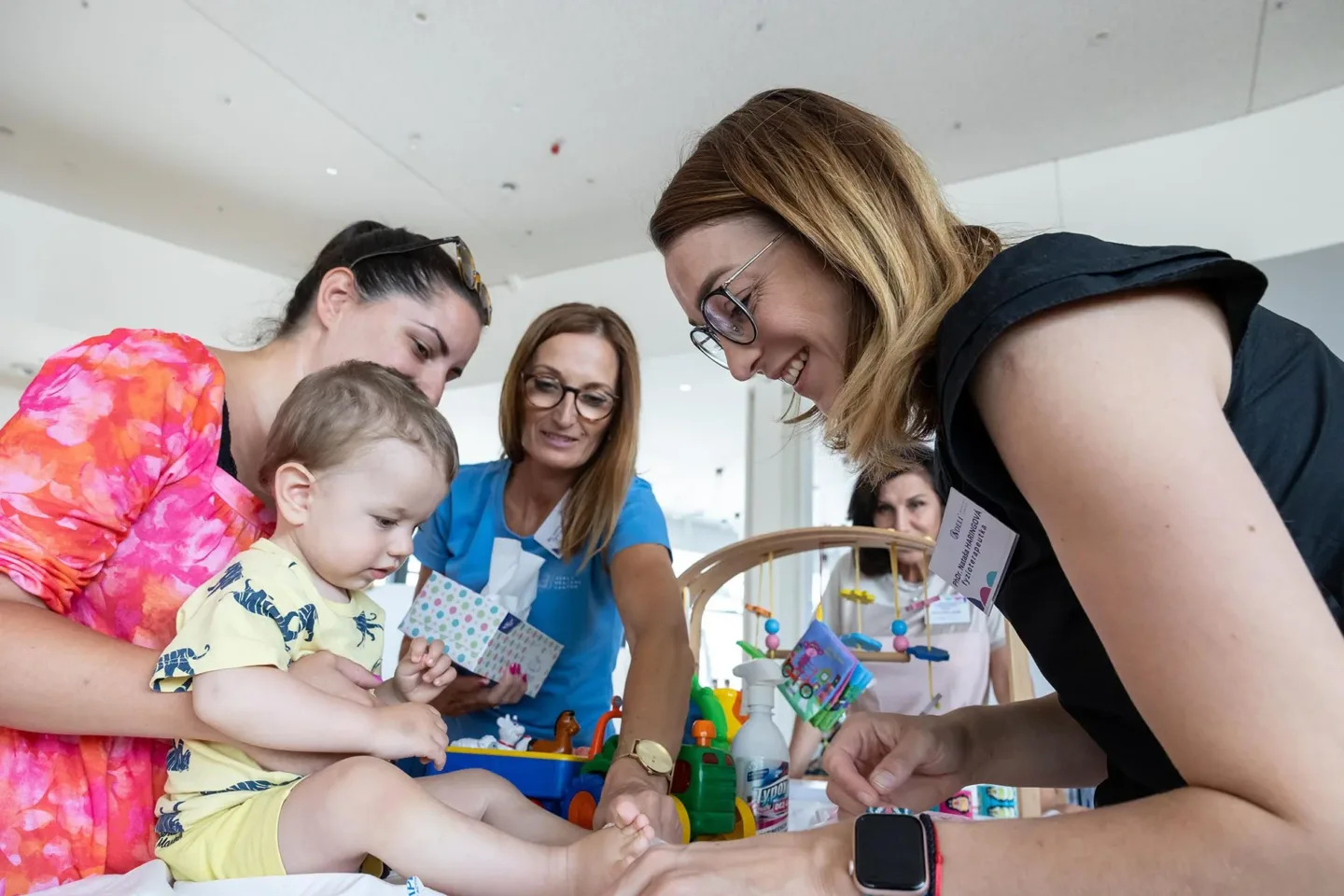
The ADELI BABY ZONE is an initiative we regularly host at the barrier-free "PARÁDA" festival in Piešťany as well as in Slovak shopping centers. Here, children aged 0 to 3 years have the opportunity to play on our dedicated "Baby Parcours." Under the expert supervision of physiotherapists from the BabyMed department at ADELI, abnormal movement patterns can be identified. Such incorrect movement patterns are often the earliest signs of compromised development. Parents are given the opportunity on-site to discuss their child's developmental milestones and gain vital insights into the dynamics of brain development in early childhood.
What is the goal of the ADELI BABY ZONE?
ADELI Medical Center and the ADELI Foundation run the "KEY TO A HEALTHIER FUTURE" project to raise awareness across society about the warning signs of developmental delay in children.
Who is considered an "at-risk child"?
Parents should be especially attentive if the child was born prematurely, if the delivery involved complications, if a genetic syndrome is suspected, or if the child's development is noticeably delayed without a known cause. Caring parents should be informed about the fundamental physiological principles of child development. Supporting a child's development in their earliest months and years directly shapes their abilities and potential later in life.
What should you do if a developmental delay is identified?
We encourage parents to seek appropriate professional and systematic solutions. We draw on the extensive experience of the therapists from the BabyMed department at ADELI Medical Center in Piešťany in recognizing and treating signs of delayed development. We outline a pathway that begins with early diagnosis and can include enrolling the child in a tailored intervention or rehabilitation program, securing funding, and closely collaborating with parents and pediatric neurologists to evaluate the milestones of the supportive program.
In 2024, we will continue our commitment to maximum openness toward the public. Within our available capacity, we will also pursue further outreach initiatives by physiotherapists from the BabyMed department in community settings where our expert guidance is both welcome and beneficial.