
Aktuelles ·
After Severe Injuries, Intensive Rehabilitation Is Always Essential
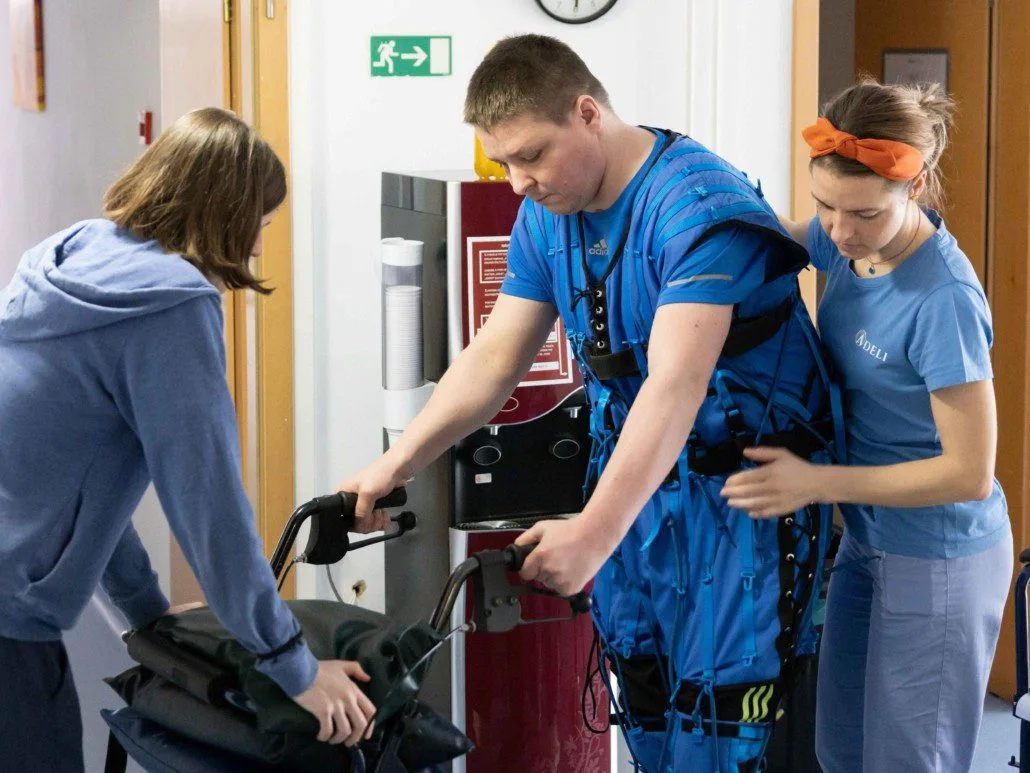
Traffic accidents and sports injuries are often accompanied by devastating head and spinal cord trauma. Even if the brain and spinal cord are deprived of oxygen for only a brief moment, nerve cells die off, which can have a direct impact on subsequent brain function. The central nervous system signals deficits through the loss of motor functions in the limbs as well as the facial and oral muscles. The prognosis depends on the extent of the damage to the central nervous system (CNS) and the possibilities for functional CNS recovery (neurorehabilitation).
We know that although brain cells are unable to regenerate, new neural pathways can be formed through targeted exercises and stimuli that promote nerve activity. The brain's neuroplasticity is actively fostered during CNS rehabilitation.
In the short video we filmed at ADELI, we meet a former professional soldier, active athlete, and diver who suffered a severe injury ten years ago in a traffic accident through no fault of his own. Thanks to his perseverance, physical fitness, and willpower, he is able to improve his condition as much as possible. Once a year, he completes intensive exercises during a three-week stay at ADELI. In a dynamic orthosis (ADELI Suit), he strengthens his physical capabilities during two-hour physiotherapy sessions guided by three physiotherapists. In his clinical speech therapy sessions, Fritz practices and reinforces his ability to swallow food without difficulty, breathe more calmly, and concentrate on speech. This rehabilitation intervention is complemented by further therapies, most notably hyperbaric oxygen therapy. In total, Fritz completes around 35 therapy sessions per week at ADELI Medical Center in Piešťany, Slovakia. Like other patients, Fritz is accompanied at ADELI by his loved ones—either his mother, his caregiver, and/or his former swimming coach, all of whom have become almost like family today.
Rehabilitation interventions of this intensity are essential for immobilized individuals to prevent muscular atrophy and further degeneration of the central nervous system. Daily rehabilitation not only slowly and gradually restores motor skills, but also compensates for the spontaneous everyday movement that healthy individuals naturally engage in and unconsciously train every day.
Please fill out the contact form so that we can send you a non-binding information pack. We will, of course, get in touch with you as soon as possible to answer all your questions.