
Aktuelles ·
Early Therapeutic Interventions: The Key to Optimal Development in Children
Parents are often surprised to find that they are not informed about the necessity of early therapeutic interventions. This article highlights the importance of timely rehabilitation for developmental disorders, illustrated through the stories of Mia and Terezka. Experts at ADELI Medical Center in Piešťany emphasize the critical role of the first 1,000 days in a child's life and appeal to parents not to lose precious time in securing the best opportunities for their children's future.
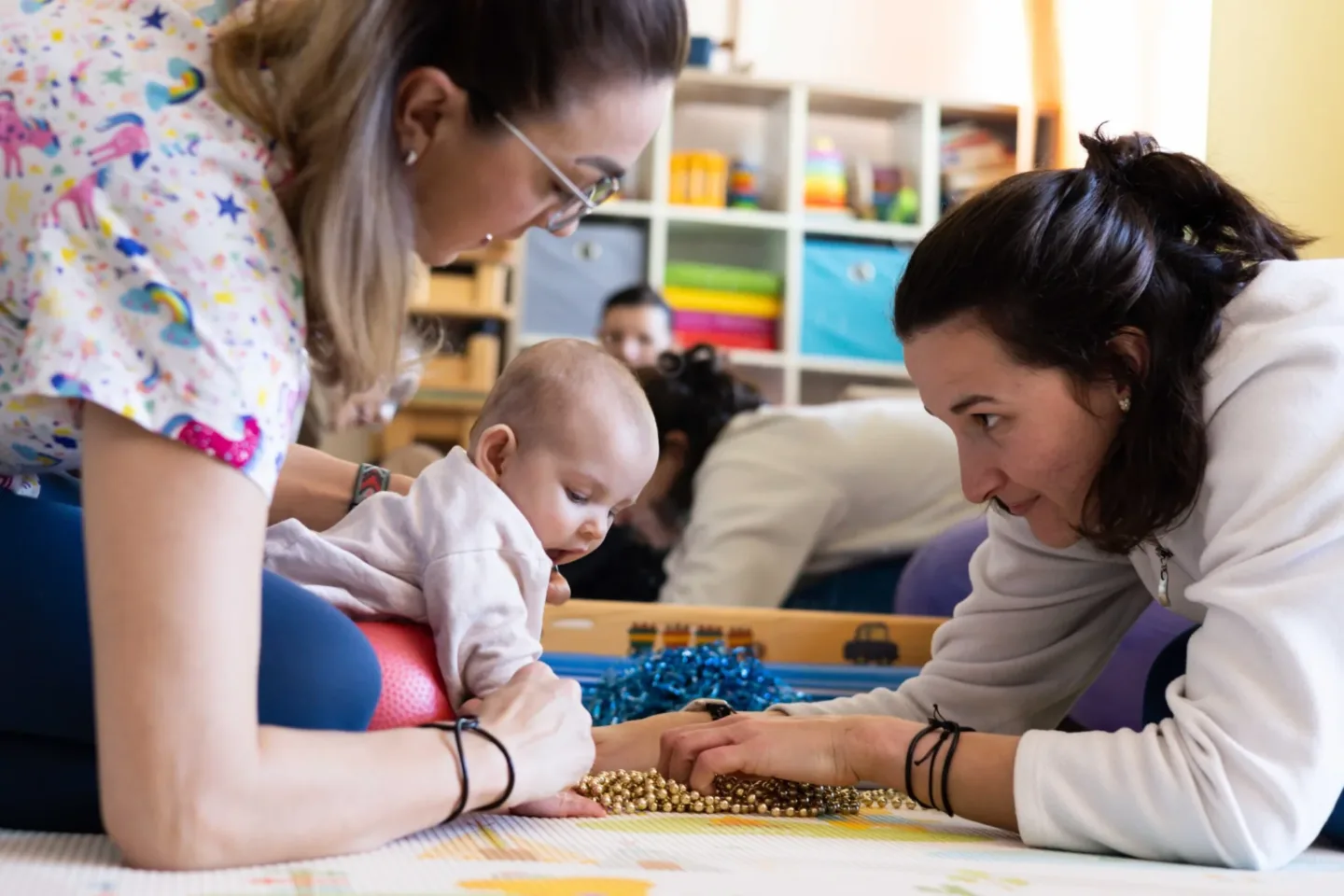
Parents are often surprised to discover that pediatric practices do not routinely inform them about the necessity of early therapeutic intervention.
Not all developmental disorders manifest during pregnancy; many come as a shock to parents only later. Even for at-risk infants, where developmental delays might be expected, early intervention cannot be taken for granted. Parents are often deeply disappointed that precious time has been lost—time their child could have used for meaningful development.
Little Mia was born with a birth weight of just 1,800 g. On her fifth day in the incubator, sepsis was diagnosed: severe blood poisoning. A specialized clinic provided vital care, yet another complication arose—a blood clot on her retina. The dramatic situation continued as the baby made virtually no developmental progress over the following months. We would like to emphasize that her mother did not let herself be reassured by doctors' comments that "the little girl is just clever." With her attentive maternal eye, she noticed that her baby was not moving the way her older siblings had at the same age. From the seventh month onward, they began intensive rehabilitation.
In September 2021, Terezka was born with a diagnosis of Down syndrome. "It was a shock. It was only much later that we noticed she couldn't move properly. That surprised us, because no one had warned us that a child with Down syndrome might not learn to walk or speak," her mother recalls. For a child's future outlook, it is essential that early therapeutic intervention is not delayed. A child's brain absorbs everything like a sponge in the first year of life—which is why it is time to ACT.
The first year is the most sensitive period in a child's development
During the first year of human life, the brain is the stage for profound, turbulent developmental processes:
In a child's brain during the first years of life, the foundations of the neural network, synapses, and connections between nerve cells are formed. Myelination also takes place. Myelin is an insulating layer surrounding the nerve fibers that accelerates signal transmission between neurons—in other words, the flow of information throughout the brain. This myelination process accelerates rapidly during the baby's first year of life and slows down later. Throughout the first year, the brain's neuroplasticity ensures that this vital organ adapts swiftly and develops in direct response to external stimuli and environmental interactions. Through sensory stimuli in the first year, a child learns to perceive and recognize sounds, shapes, colors, and faces, supporting the development of corresponding brain regions. If a child remains lying down without achieving an upright posture, they miss out on vital environmental stimuli, leading to delayed development of the brain and central nervous system. Crucial motor milestones in the first year include lifting the head, crawling, getting onto all fours, sitting, standing, and eventually walking. When motor development falters, the child lacks the necessary impulses for developing further milestones and coordination.
How and why does a developmental risk arise in an infant?
The medical procedures used during an emergency delivery or to save a mother's life are truly life-saving; however, as with any acute delivery, there is an inherent risk of oxygen deprivation to the brain. This is our urgent appeal to parents: do not wait for signs of nervous system immaturity to manifest on their own. Developmental deficits must be addressed as swiftly as possible. Rehabilitation should begin without delay. It is crucial to recognize every developmental deviation as early as possible—and to consult specialists without hesitation.
https://adelicenter.com/sk/medic%C3%8Dnska-ponuka/programy/babymed/
What should prompt heightened attention?
High-risk developmental factors during pregnancy, following premature birth, or after a complicated delivery.
Suspected or confirmed genetic syndromes.
Consequences of oxygen deprivation before, during, or after birth, suffocation, or encephalitis.
The first 1,000 days are decisive
At ADELI Medical Center in Piešťany, top specialists from Slovakia and abroad have been providing expert support for 20 years—not only in diagnosis, but also in delivering targeted, effective rehabilitation. Families from across Europe and overseas come for our specialized rehabilitation programs. The reason is the unique ability of ADELI experts to identify developmental deviations early on and, backed by 20 years of know-how, design realistic rehabilitation goals that deliver tangible results.
Professor Dr. Heinrich Binder, Medical Consultant at ADELI, calls for heightened vigilance regarding infant development: "If a child displays unusual symptoms in the first year of life—such as persistent primitive reflexes, abnormally high or low muscle tone, asymmetrical posture, or a strong preference for one side—these point to an immaturity of the central nervous system. In such cases, you must do everything in your power to determine whether infantile cerebral palsy is indeed developing or not."
Experts urge parents to closely observe their children and seek therapeutic interventions without hesitation. "Without physical therapy, nothing moves forward at all. You need a skilled, experienced therapist. The decisive factor is time and the developmental stage of the brain, which forms during the first 1,000 days of life," Prof. Binder continues. "During the first two years, walking, motor skills, and natural human movement sequences develop. This process must be actively supported, because if nothing is done, a pathological gait pattern can become established that is extremely difficult to reverse."
Do not hesitate—take action
The ADELI BabyMed early rehabilitation program
https://adelicenter.com/sk/medic%C3%8Dnska-ponuka/programy/babymed/
is designed for children aged one month to three years. Physicians and physiotherapists work together in a targeted manner to develop the child's motor and cognitive abilities, independent spatial mobility, communication, and feeding skills.
If you have any concerns regarding your child's development, please visit www.babymed.sk and arrange an appointment that could make a lasting positive difference in your child's and your family's life.
And how are Mia and Terezka doing today?
The BabyMed program at ADELI is an intensive, two-week, and relatively demanding early intervention therapy program. Thanks to this specialized care, children's motor and cognitive abilities can make significant strides forward. "After our rehabilitation at ADELI, we returned home and Mia was completely transformed. She started babbling, rolling over, and spontaneously tried to crawl," her mother from Orava happily shares, deeply moved by the progress that eventually led to Mia learning to walk.
Similarly, Terezka's parents experienced the profound effect of the intensive BabyMed rehabilitation program at ADELI: "Something incredible happened for us. Thanks to the coordination techniques used by the therapists, our little Terezka was able to support herself while standing," recalls her mother, Marika, of that pivotal moment: "I almost collapsed from pure joy." She adds that this breakthrough gave Terezka the courage to take her very first step, after which the little girl gradually learned to walk. Today, Terezka is three years old; whenever she hears her favorite songs, she hops, raises her arms, claps, and dances. She runs after her older brother Jurko without any help at all. She loves playing at the playground and imitating others' movements—she is lively, energetic, and agile.
"To us, this is a true miracle. A miracle that was set in motion and achieved at ADELI," says mother Marika. "It is so vital to consult specialists as early as possible and never simply wait, hoping that a child with delays will somehow catch up on their own one day. I would say this to any parent who has even the slightest doubt about their child's development."
You can support both of these brave little fighters here:
https://www.nadaciaadeli.sk/pribehy/pomoc-potrebuju/vankova-terezia
https://www.nadaciaadeli.sk/pribehy/pomoc-potrebuju/mia-kozakova
Nataša Haringová, a physiotherapist in the BabyMed department, shares her experienced perspective on early intervention: "At ADELI, we take a very different approach to 'waiting and seeing.' Our guiding principle is never to waste a single minute and to initiate therapy at the earliest possible age. The first year is a decisive window of opportunity upon which the child's entire future development depends. The earlier a child begins early therapeutic intervention, the brighter their outlook for the future. In those
first months, a child's brain and its neuroplasticity act like a 'sponge,' experiencing exponential growth. A child learns faster and more effortlessly than ever again in life, which is why this precious time must be utilized through intensive, dedicated therapy."
While a rehabilitation program can be demanding for an infant just a few months old—encompassing 3 to 4 hours of therapy daily, 5 days a week—"we tailor the program with utmost sensitivity so that the child has ample time to rest, feed, and play," explains therapist Nataša Haringová regarding rehabilitation stays at ADELI. "Through rehabilitation, we strive to maximize the functionality of the baby's central nervous system, enhance their motor skills, and normalize muscle tone. We succeed in improving static and dynamic balance as well as coordination, knowing that we are directly broadening their opportunities for development, better learning capacity, and an independent life."
You can read the complete article here: https://svetevity.sk/magazin/pr-clanky/96158170-terezke-hrozilo-ze-nebude-chodit-ani-rozpravat-co-zmenilo-jej-osud