
Aktuelles ·
New Hope for Patients with Spinal Cord Injuries
ADELI Medical Center introduces Cyberdyne's state-of-the-art HAL robotic exoskeleton from Japan, combining it with its proven classical physiotherapy in the ADELI suit.
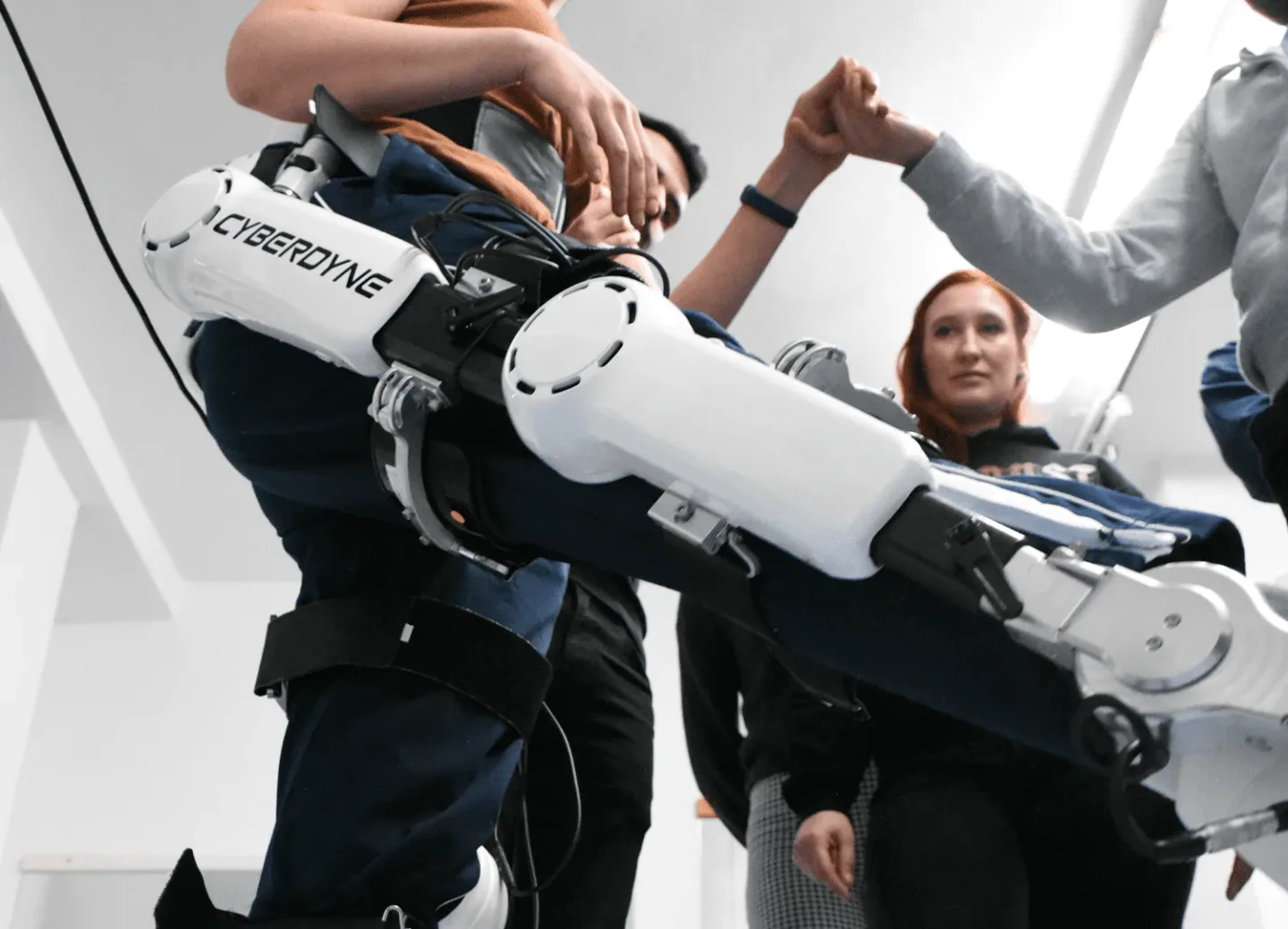
A Powerful Synergy
In a groundbreaking move that heralds a new era in neurorehabilitation, ADELI Medical Center, based in Piešťany since 2004, is integrating Cyberdyne's HAL (Hybrid Assistive Limb) robotic exoskeleton into its dynamic proprioceptive correction and rehabilitation services. Individuals affected by spinal cord injuries, brain and spinal strokes, and a wide range of neuromuscular conditions now have the opportunity to redefine their lives using technology developed by the Japanese company Cyberdyne.
Human mobility seems effortless until it is lost, revealing the complex neurological processes behind it. For paralyzed individuals—often as a result of traffic, workplace, or sports accidents—weakened bioelectric signals from the brain make adequate movement impossible. This limitation is particularly critical for patients with traumatic brain and spinal injuries. Daily rehabilitation exercises are essential for regaining the ability to move.
HAL's Unique Approach to Bioelectric Signals (Subheading)
A marvel of cyber technology: HAL, the Hybrid Assistive Limb, stands out as a unique and transformative tool in the medical field. It has the extraordinary ability to detect even the subtlest bioelectric signals transmitted to the skin. These signals are then processed to support the desired movements using motors at each hip and knee joint. At the same time, the brain receives feedback from the muscles through the sensory system, enabling patients to relearn correct walking patterns.
Supporting Motor Skills and Neuroplasticity
HAL's revolutionary contribution: HAL functions as a cutting-edge cybernetic device serving as a neurorehabilitation tool. Its unique contribution lies in responding to the wearer's movement intentions, detecting and amplifying the faintest muscle signals to provide sufficient movement support. This technology aids in the recovery of impaired motor functions and, thanks to neuroplasticity, facilitates the formation of new neural connections. Here lies the opportunity that makes all the difference: the central nervous system reconnects with motor units and motor neurons leading to muscle fibers.
Repetition Made Easy
The presentation at ADELI Medical Center demonstrates HAL's ability to facilitate movement repetition, helping patients restore lost mobility, motor skills, and locomotion. As illustrated by a 2021 study by Nakajima et al., HAL makes a significant contribution to neuroplasticity, offering patients the chance to rebuild vital neural connections.
An Unrivaled Opportunity for Improved Neurorehabilitation Outcomes
Attila, a young man with a spinal cord injury, highlighted the positive impact of HAL on his recovery journey, saying: "Training with the HAL system contributed to my being able to play sports and work again today. I would recommend it to anyone in a similar situation."
This collaboration between ADELI Medical Center and Cyberdyne marks a significant step forward in the field of neurorehabilitation, ushering in a new era of hope and possibilities for individuals facing physical challenges. The synergy between ADELI's dynamic proprioceptive correction and Cyberdyne's HAL offers an unrivaled opportunity for improved neurorehabilitation outcomes.