
Aktuelles ·
Symposium & Live Stream: SPASTICITY as a Phenomenon and Options for Individually Tailored Therapy
As capacity is limited, we kindly ask you to confirm your binding attendance at: info@adelicenter.com (ON SITE). You can also follow the symposium online; simply register using the link below (ONLINE).
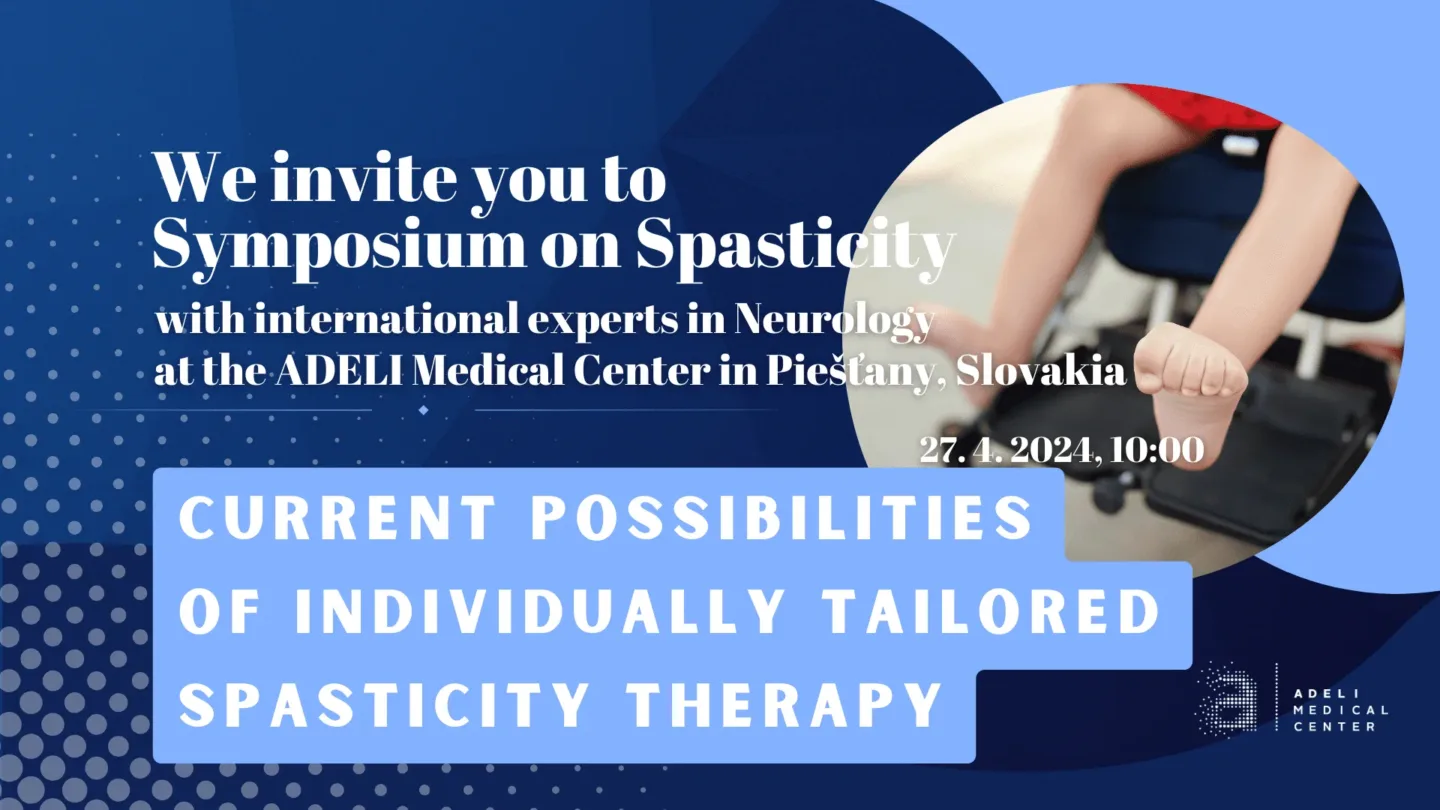
Spasticity as a phenomenon originates from conditions such as CP or stroke, while simultaneously serving as the driving force behind our therapeutic and rehabilitative work.
ADELI Medical Center invites you to a symposium on spasticity featuring world-leading experts at ADELI, Piešťany, Slovakia, under the theme Current Options for Individually Tailored Therapy of Spasticity. The symposium is aimed at medical experts, therapists, as well as families and patients…
Symposium Programme – 27 April 2024
10:00 am – Opening of the symposium with presentations in the conference hall, start of the online stream
12:00 pm – Open panel discussion with the audience on the topics presented
This symposium focuses on selected special therapeutic interventions that can be considered and discussed as complementary options to standard rehabilitation on a case-by-case basis. Admission is free.
As capacity is limited, we kindly ask you to confirm your binding attendance at: info@adelicenter.com.
You can also follow the symposium online; simply register using the link below.
Speakers:
Dr. Jozef PRIBULA, PhD., MBA: “Spasticity – What It Means”
Prof. Memet ÖZEK: “Neurosurgical Methods for the Treatment of Spasticity”
Prof. Heinrich BINDER: “So-Called Conservative Measures for the Treatment of Spasticity”
Dr. Brigitte FREUNDL: “Epidural and Transcutaneous Spinal Cord Stimulation in Spasticity”
Prof. Dr. Leopold SALTUARI: “Intrathecal Antispastic Therapy”
Spasticity can be described using medical terminology, or through the symptoms experienced by patients: stiffness, restricted mobility, cramps, and pain. Alleviating these symptoms, eliminating them wherever possible, and improving quality of life is the purpose and mission of neurological rehabilitation. The interventions applied in neuro-rehabilitation must always be tailored to individual circumstances. First and foremost, these pertain to the patients themselves: the extent of involvement, the affected body parts, and, of course, the nature and intensity of the symptoms. Since a significant proportion of patients with CP are children or adolescents, the therapeutic approach must be designed in an age-appropriate manner. Furthermore, when determining therapeutic and rehabilitative measures, the resources of the family and the conditions of the wider social environment must always be taken into account.